

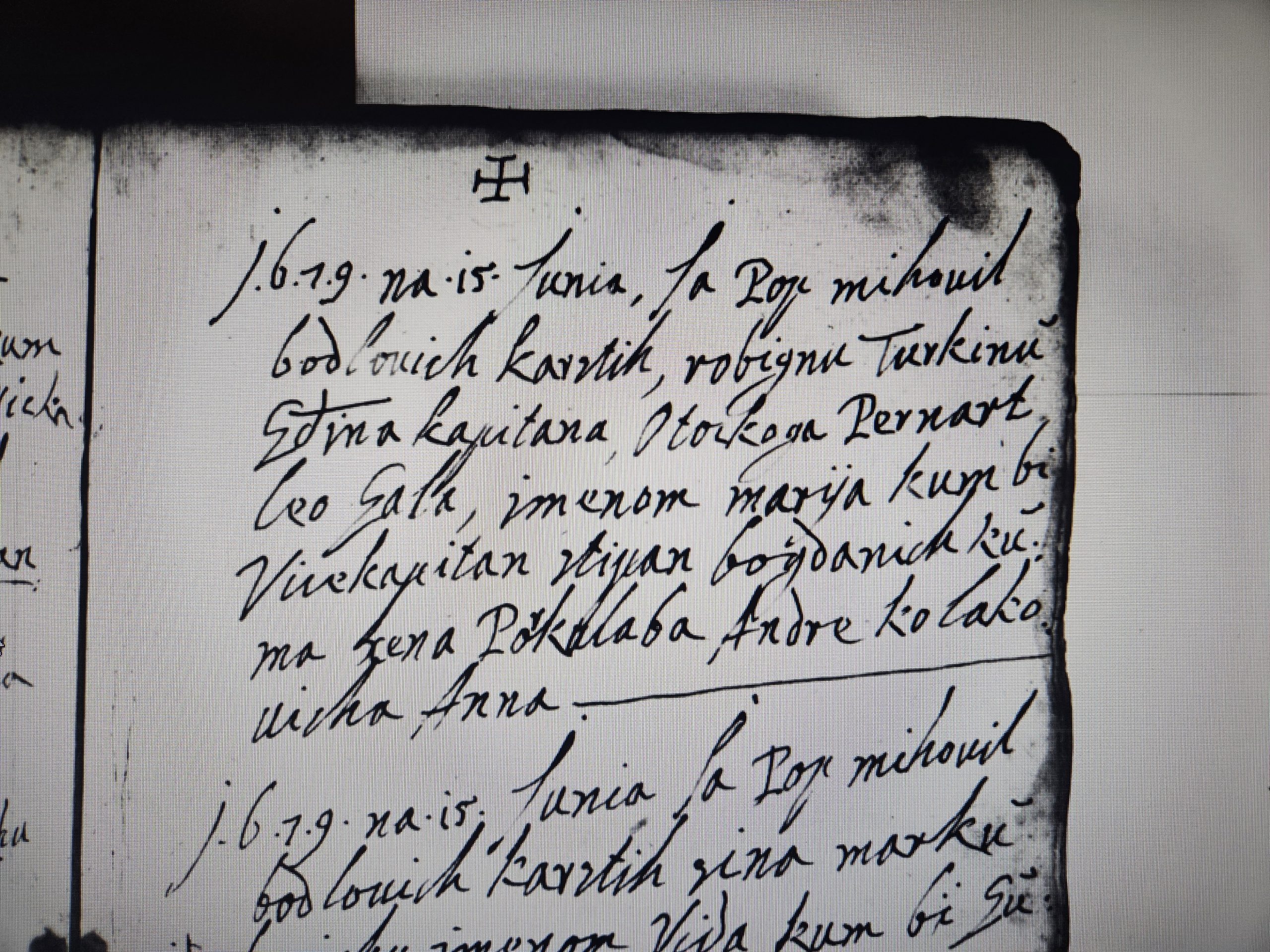
While researching the surname Radović in the parish registers of Otočac from 1664 onward, I came across a really interesting entry – in the 17th century, the local priest baptized a woman described simply as a “Turkish woman.”
If you’re exploring genealogy in the Otočac area, the period from the 17th century onward is especially fascinating. At the time, Lika – including the parish of Otočac – sat right on a border between worlds: between the Habsburg Monarchy and the Ottoman Empire, between Catholicism, Orthodoxy, and Islam, and between military rule and church life.
What also makes these records special is the language. Although church records were officially supposed to be written in Latin after the Council of Trent, the Otočac registers were written in Croatian. This suggests that the local clergy were closely connected to everyday people and that this was a frontier area where practicality often mattered more than strict church rules.
So who was this “Turkish woman”?
At the time, the term didn’t necessarily mean she was ethnically Turkish. In the Military Frontier, it was often used for people coming from Ottoman territory. She could have been Muslim, Orthodox, Vlach, or a woman who crossed the border looking for a new start. Baptism, in that context, wasn’t just about religion – it also meant joining the community and beginning a new chapter in life.
The 17th century was marked by frequent wars between the Habsburg Monarchy and the Ottoman Empire, which led to major population movements: border crossings, refugees, captives, and the resettlement of empty or devastated areas of Lika.
One more detail makes this record especially striking. The original entry doesn’t mention her former or “Turkish” name at all. Instead, she was given a new Christian name at baptism – Maria. This was common at the time and symbolized a clean break from her previous identity and the start of a new life within the Catholic community.
Details like this show how layered and surprising family history can be. Behind a single word in a parish register, there’s often a much bigger story of migration, conflict, and new beginnings.
Maybe there’s a similar story hidden in your own family tree.
In our next post, I’ll share another fascinating story connected to the Otočac area from the same period — so stay tuned.