
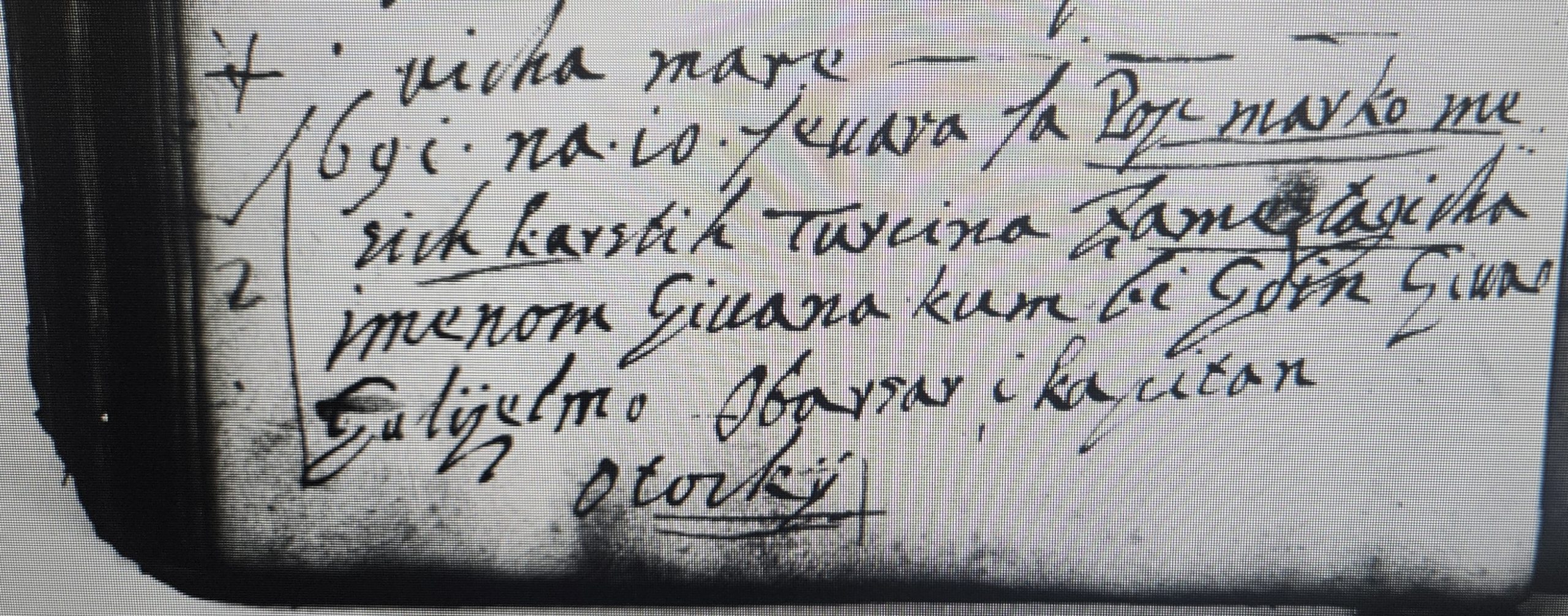
Continuing my research on the Radović family in the parish records of Otočac, I came across another really interesting entry from the turbulent late 17th century.
In 1691, Marko Mesić baptized a Turk named Zame*tagicha, giving him a new Christian name – Giuano.
Marko Mesić wasn’t just a local priest. He was one of the key figures in Lika during the Great Turkish War (1683–1699). He led anti-Ottoman actions in Lika and Krbava, helping to free towns and villages, rebuild churches, organize parishes, and get community life back on track.
Back then, Lika was a frontier region between the Habsburg Monarchy and the Ottoman Empire, often devastated by war and depopulation. Mesić acted as a link between the military authorities and the local people, organized resettlement, helped integrate newcomers, and strengthened the Catholic faith to keep the society stable. After the war, large parts of what is today Croatia were freed from Ottoman rule, and a new border was established — much of which still shapes the region today.
So this record isn’t just about a single baptism. It captures a moment of change — a new name, a new faith, and a new start. Like the previously mentioned “Turkish woman,” we don’t know much about Zame*tagich’s life before, but we can see this moment of transition clearly.
Records like this show how family histories in Otočac are closely tied to major European events of the 17th century. Behind a single name in a parish register, there’s often a story of war, migration, and a completely new chapter in life.
In my next post, I’ll stay in the Otočac area and explore the Habsburg Monarchy hospital that operated there during the wars against Napoleon — another fascinating chapter in the region’s history.